
What’s Next: Edward Cabrera Boosts Cubs Rotation at a Hefty Price
A rotation upgrade that came with real prospect cost
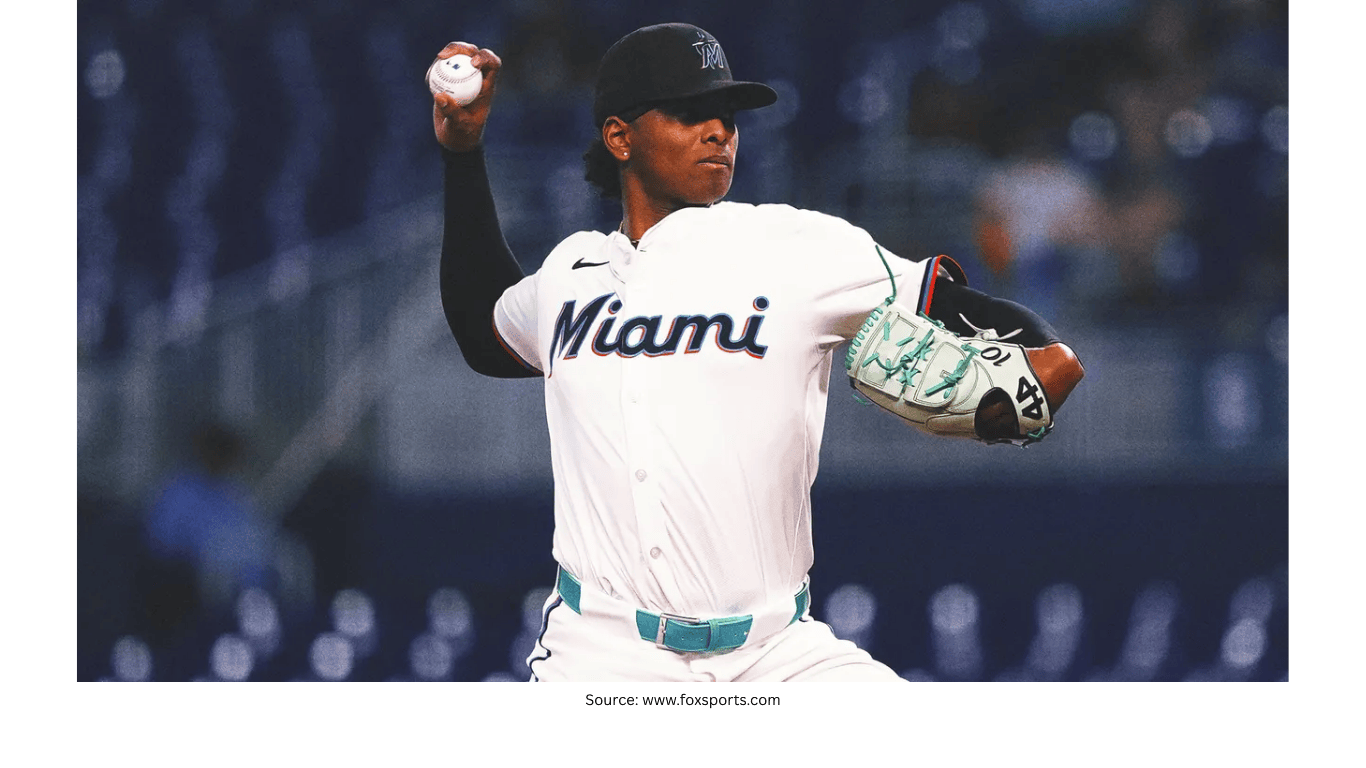
The Chicago Cubs strengthened their starting rotation by acquiring right-hander Edward Cabrera from the Miami Marlins, a move that addresses a stated offseason priority but required a significant return. Cabrera is reportedly headed to Chicago in exchange for three prospects, a group headlined by outfielder Owen Caissie, with infielders Cristian Hernandez and Edgardo De Leon also included in the package.
For the Cubs, the trade represents a clear commitment to adding established pitching. The club entered the offseason aiming to add at least two proven arms. When left-hander Shota Imanaga accepted a one-year, $22 million qualifying offer to remain with Chicago, it could have altered the team’s approach. Instead, the Cubs leaned into the trade market, landing a starter who can slot near the top of the rotation and deepen the staff when healthy.
Why Miami pushed for Owen Caissie
From Miami’s perspective, Caissie is the centerpiece. The Marlins have reportedly targeted him for some time, and the deal reflects the price attached to a 27-year-old starter with multiple years of team control remaining. Caissie, 23, is described as the Cubs’ No. 1 overall prospect. He made his major-league debut in 2025 while remaining rookie-eligible, and he is expected to step into the Marlins lineup quickly.
Miami’s return is not only about the immediate impact of adding another bat, but also about control and roster planning. Caissie is expected to complement breakout slugger Kyle Stowers, and the Marlins will have Caissie under team control for the next six full seasons. The inclusion of Hernandez and De Leon adds further prospect depth to the package.
Cabrera’s profile: performance growth alongside health questions
Cabrera arrives with both upside and risk, and the Cubs appear to have accepted that trade-off. He spent time on the injured list multiple times last season, including two stints related to right elbow issues. Those concerns were part of the conversation for interested teams, particularly with “MRI” and “elbow” being a combination that can affect a pitcher’s market.
At the same time, Cabrera rebounded after his injured-list stints and produced what was described as his best season with the Marlins. He finished the year with a 3.53 ERA and set career highs in strikeouts (150), innings (137.2), and starts (26). A key development was improved control: his walk rate dropped to a career-low 8.3%, the eighth-best mark among National League starters.
How the move fits the Cubs’ recent pursuit of pitching
The Cubs’ search for a top-flight starter has been ongoing. Their pursuit dates back to the previous offseason, when Chicago nearly completed a deal for left-hander Jesus Luzardo before hesitating due to his medical report. Luzardo was later traded to the Philadelphia Phillies ahead of the 2025 season, where he made 32 starts, posted a 3.92 ERA, and received down-ballot National League Cy Young votes.
That earlier near-miss provides context for why the Cubs were willing to pay a high prospect price this time, even with medical history being part of Cabrera’s profile. The organization’s decision suggests an emphasis on securing impact pitching rather than risking another missed opportunity in a competitive market.
What Chicago’s rotation could look like in 2026
Cabrera gives the Cubs a 27-year-old starter with three remaining years of team control, a detail that adds to the value of the acquisition. He is expected to jump immediately into a prominent role in a rotation that could feature a mix of arms throughout the 2026 season.
The group mentioned as potential rotation options includes:
- Edward Cabrera
- Cade Horton
- Matthew Boyd
- Jameson Taillon
- Shota Imanaga
- Colin Rea
- Javier Assad
- Justin Steele
With that depth, the Cubs’ offseason focus is not necessarily finished. The club is still aiming to add a top-tier impact bat before Opening Day, with Alex Bregman and Bo Bichette cited as examples of the type of hitter that could fit the plan.
Ripple effects: pressure rises for other contenders
The Cubs landing Cabrera also affects the broader offseason landscape. With one of the more attractive trade targets now off the market, pressure increases on other contenders seeking rotation upgrades without relying solely on free agency. The deal, which reportedly accelerated earlier in the week, narrows the pool of available impact starters and raises the stakes for clubs still looking to act.
The New York Yankees were among the teams reported to have interest in Cabrera, though multiple reports indicated they were not close to acquiring him. The Yankees’ rotation situation is complicated by multiple injuries: Gerrit Cole (rehab from Tommy John surgery), Carlos Rodon (left elbow surgery to remove bone spur), and Clarke Schmidt (rehab from Tommy John) are all expected to begin the season on the injured list. With varied timelines and the uncertainty that comes with elbow recoveries, New York needs depth behind Max Fried, Will Warren, Luis Gil, and Cam Schlittler at the start of the year.
The Yankees’ offseason activity was described as limited, with moves including re-signing infielder Amed Rosario and bringing back outfielder Trent Grisham on a one-year, $22 million qualifying offer. In that context, missing out on Cabrera intensifies the need for additional pitching solutions.
Trade and free-agent market: options remain, but the clock is moving
Other teams cited as facing heightened pressure to add an impact starter include the Mets, Orioles, Padres, Braves, and the Athletics. For some clubs, the trade market may be the preferred route. The Mets, despite having the financial capacity to pursue top free-agent arms such as Framber Valdez and Ranger Suarez, are described as leaning toward trading for a lower-cost starter under their president of baseball operations, David Stearns.
Pitchers mentioned as potential trade candidates this offseason include Brewers right-hander Freddy Peralta, who is owed $8 million in 2026, and reigning Cy Young Award winner Tarik Skubal, who is in his walk year and described as unlikely to be dealt without an enormous return. Additional arms who could be on the trade block either this offseason or closer to July’s trade deadline include:
- Hunter Greene (Reds; free agent in 2029)
- Joe Ryan (Twins; free agent in 2028)
- Pablo Lopez (Twins; free agent in 2028)
- MacKenzie Gore (Nationals; free agent in 2028)
Even with those names still in circulation, the market is described as thinning with spring training approaching. That reality is part of what makes the Cubs’ move notable: it addresses a clear need early enough to shape the rest of the offseason, while also forcing other contenders to adjust their plans in a tightening environment.