
Real Madrid thrash Real Sociedad to go top as Vinicius converts two penalties
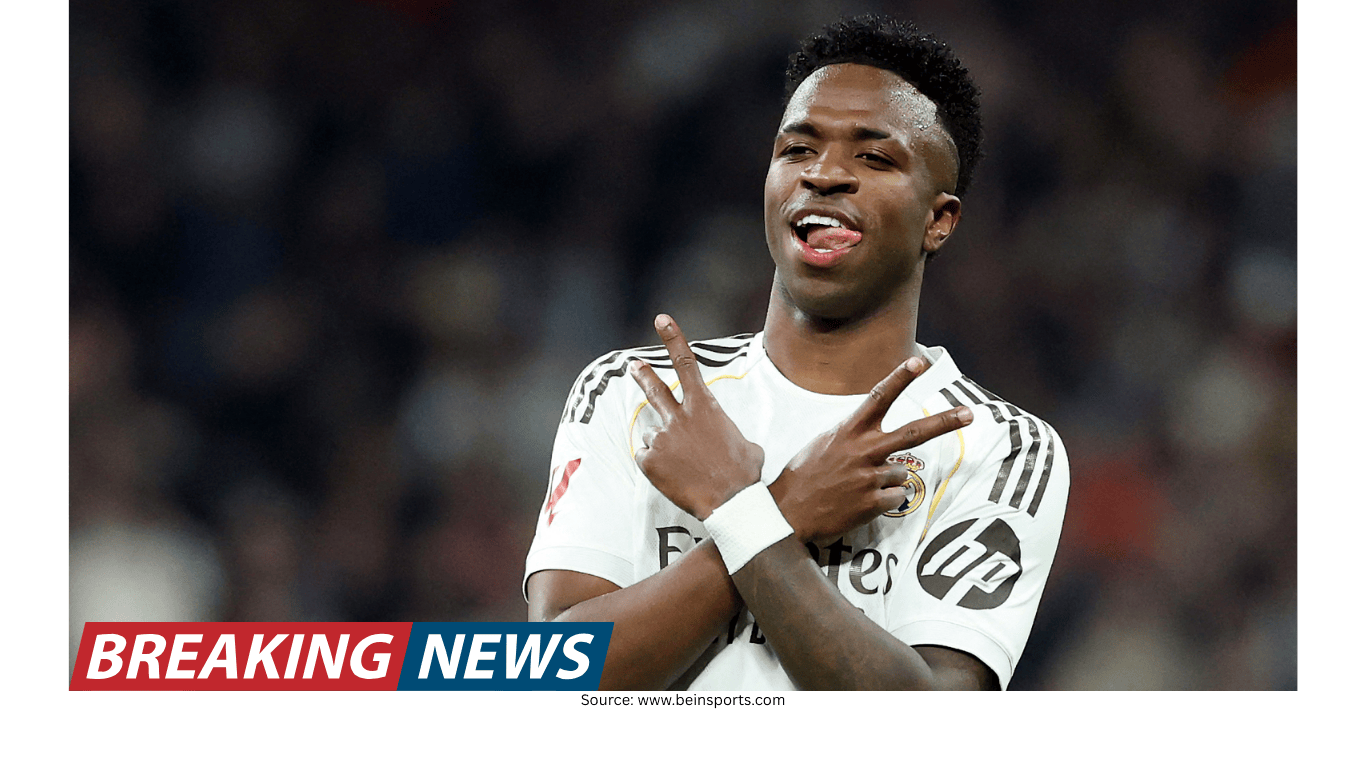
Madrid win big without Mbappé and climb to the top
Real Madrid’s latest league win followed a familiar script from this season: the result arriving first, with the performance catching up later. Against Real Sociedad at the Santiago Bernabéu, the home side produced a decisive 4-1 victory that confirmed a growing sense of reconciliation with their own stadium and its demanding atmosphere. The win also extended Madrid’s league streak to eight consecutive victories and ensured they would sit in first place for at least 48 hours.
There was an added layer of intrigue before kick-off. Madrid coach Arbeloa chose to rest Kylian Mbappé, described as the team’s 38-goal talisman, with a significant trip to Lisbon looming. The decision carried risk: in the four league matches in which Mbappé had not scored, Madrid had only won one. Yet the evening ended with a comfortable scoreline and a set of encouraging signs for the weeks ahead.
Madrid did not dominate through sustained control or elaborate creation. Instead, they were clinical, opportunistic, and ruthless in key moments. Real Sociedad, meanwhile, struggled to offer resistance at either end—an imbalance that proved fatal once Madrid began to find space behind their defensive line.
Opposite directions: fatigue for Sociedad, focus on Lisbon for Madrid
The match arrived at a different moment for each side. Real Sociedad came into the game returning from a crucial Copa tie at San Mamés, a context that made rotation almost unavoidable. Coach Matarazzo made four changes at the Bernabéu, a moderate reshuffle that preserved much of his core group but still reflected the physical toll of recent commitments.
For Madrid, the fixture was framed as a step on the road to Lisbon, a place described as “ground zero” from a painful night a little more than two weeks earlier—an experience they are now set to revisit “without a safety net.” That context helps explain why Mbappé was held back: the French forward would be considered essential at the Estádio da Luz.
In the end, Madrid’s ability to win convincingly without their biggest scorer became one of the headline takeaways. It was not just about surviving a night without Mbappé; it was about discovering that there is, at least sometimes, another route to goals.
Gonzalo strikes early as Trent’s passing makes the difference
Madrid’s opening goal arrived almost immediately and set the tone for a match in which finishing proved more reliable than construction. In the fourth minute, Gonzalo put the hosts ahead with a striker’s finish, applying what was described as the “manual of the number nine.” He found space with a sharp run and finished on the move with a subtle touch, using the angle created by a slight brush of the ball to guide it toward the net.
The assist came from Trent, whose greatest virtue on the night was his passing. His presence was framed as a long-awaited “appearance,” with the suggestion that Federico Valverde helped cover for defensive shortcomings while Trent provided first-class distribution. The early goal did more than change the scoreboard: it revealed a plan.
Real Sociedad’s tendency to defend aggressively and step forward left them exposed when they had to retreat. Madrid responded by seeking direct balls into space, using longer passes to bypass midfield congestion. Eduardo Camavinga was highlighted as a launching point for these transitions, and the approach created further chances. Gonzalo even came close to adding another, only to miss after switching feet—an example of how, in the penalty area, extra touches can be costly.
Two penalties, two stories: Huijsen’s error and Vinicius’ craft
Madrid’s early advantage did not last long. At 1-0, a costly mistake from Dean Huijsen brought Real Sociedad back into the contest. Yangel Herrera drove into the Madrid area “like a knife,” and Huijsen, rather than simply blocking the shot, committed a foul that resulted in a penalty. The incident was described as a moment of youthful rashness, a reminder that he remains a defender still learning the trade. The Bernabéu’s reaction reflected the complicated relationship between team and crowd this season: whistles and support can arrive almost simultaneously, as frustration quickly turns to regret.
Real Sociedad’s equaliser came in the 20th minute, with Mikel Oyarzabal converting from the spot to make it 1-1. Yet the game soon swung again, this time through Vinicius Junior. The Brazilian winger drew a foul in the area after beating Aramburu with a feint and then going down under contact. The second penalty of the match was described as more debatable than the first, with Vinicius making the most of the contact to ensure the referee noticed it.
Vinicius then took responsibility and scored, restoring Madrid’s lead at 2-1 in the 24th minute. In that sequence, he was both the cause and the consequence: he created the situation and finished it. More broadly, his performance carried a hint of revival. For long stretches he reminded observers that he “was once a magician” and may be on the path back to that level—something Aramburu, repeatedly put under pressure, could attest to.
Valverde’s strike and a halftime lead built on goals, not control
Despite the flurry of scoring, the match was not defined by a clear overall rhythm or a single dominant side. Real Sociedad “won the ball on points,” suggesting they had spells of possession, while Madrid edged the battle of chances by a similar margin. What separated the teams was how those moments were converted.
In the 30th minute, Madrid made it 3-1 through Valverde. The goal was notable for how little resistance Sociedad offered: Valverde was allowed to control the ball at the edge of the area and then pick out the top corner without being seriously challenged. It was a high-quality finish, but also an indictment of the defending in front of him.
By halftime, Madrid had scored three goals, and Gonzalo nearly added a fourth before the break. The overall performance was described as one where the “reasons were the goals.” In other words, the scoreline was doing the heavy lifting. Still, few at the Bernabéu would complain about such efficiency, especially in a season where the team’s style has often been questioned.
Vinicius ends the contest quickly after the break
Any lingering tension disappeared almost as soon as the second half began. In the 47th minute, Vinicius struck again from the penalty spot after another incident involving Aramburu. Near the byline, Vinicius produced a brilliant piece of skill to escape pressure, and Aramburu—having lost track of him—brought him down once more. It was the second penalty conceded by the same defender, and Vinicius again converted, making it 4-1.
At that point, the match was effectively decided. The emotional edge faded, but the flow of chances did not. With the result seemingly safe, both sides played with a looseness that opened up the penalty areas. Opportunities arrived in volume, likely helped by a general relaxation in defensive intensity.
Chances continue, substitutions follow, and the Bernabéu softens
Even with the outcome beyond doubt, the game continued to produce chances for a range of players. Gonzalo had two further openings, while Valverde, Jon Martín, Aihen Muñoz, Vinicius, and Güler were also involved in moments that could have changed the scoreline. The match became a contest of transitions and scattered opportunities rather than a controlled, tactical battle.
Arbeloa used the comfortable margin to introduce Dani Carvajal and David Alaba, both treated cautiously in recent weeks as players returning from physical issues. The match conditions did not provide a full test, but Carvajal still made a notable contribution by intercepting a Guedes shot—an action that landed well with a crowd increasingly on the team’s side.
The broader theme of the evening was the Bernabéu’s shifting mood. The stadium has been described as “unstable material” this season, quick to whistle and quick to applaud. On this night, the ending suggested a warmer relationship: a sense that the team and its supporters are finding common ground again.
Key talking points for Madrid after the 4-1 win
Life without Mbappé, at least for one night: Resting a 38-goal forward is never straightforward, but Madrid found goals through Gonzalo, Valverde and Vinicius.
Gonzalo’s impact in the role of a classic striker: His early finish and movement supported the idea that he can thrive, particularly when the team plays more directly.
Trent’s influence as a passer: His assist for the opener underlined the value of his distribution, with Valverde helping to balance defensive vulnerabilities.
Vinicius as the decisive figure: He won two penalties and scored both, while also showing flashes of the form that once made him a constant threat.
Defensive lessons remain: Huijsen’s penalty concession showed how quickly a match can turn, even when Madrid start strongly.
Match summary
Score: Real Madrid 4-1 Real Sociedad
Goals: 1-0 Gonzalo (4'), 1-1 Oyarzabal (20' pen), 2-1 Vinicius Junior (24' pen), 3-1 Federico Valverde (30'), 4-1 Vinicius Junior (47' pen)
Referee: Francisco José Hernández Maeso
VAR: Daniel Jesús Trujillo Suárez, Javier Iglesias Villanueva
Cards: Dean Huijsen (19'), Beñat Turrientes (91')
Substitutions noted
Gonçalo Guedes (45', for Wesley)
Dani Carvajal (59', for Trent Alexander-Arnold)
Beñat Turrientes (59', for Yangel Herrera)
David Alaba (59', for Antonio Rüdiger)
Orri Óskarsson (59', for Mikel Oyarzabal)
Daniel Díaz (72', for Pablo Marín)
Brahim Díaz (72', for Federico Valverde)
Dani Ceballos (72', for Eduardo Camavinga)
Jorge Cestero (78', for Aurélien Tchouaméni)
What the result means
For Madrid, the night delivered what matters most in a league campaign: points, momentum, and a sense of progress. The team’s path this season has been described as unconventional—results leading the way, with the football following behind. Against Real Sociedad, they again leaned on efficiency, but also collected encouraging signals: Trent’s passing, Gonzalo’s finishing, Rüdiger’s presence in defence ahead of the Benfica match, and Vinicius showing signs that his best version may be returning.
For Real Sociedad, the match offered little to build on. The combination of fatigue, defensive fragility and limited attacking threat meant they were punished repeatedly. As the assessment put it, they neither defended nor attacked—two shortcomings that almost inevitably lead to defeat, especially at the Bernabéu when Madrid find a way to turn chances into goals.