
Report: Mets set to acquire All-Star right-hander Freddy Peralta from Brewers
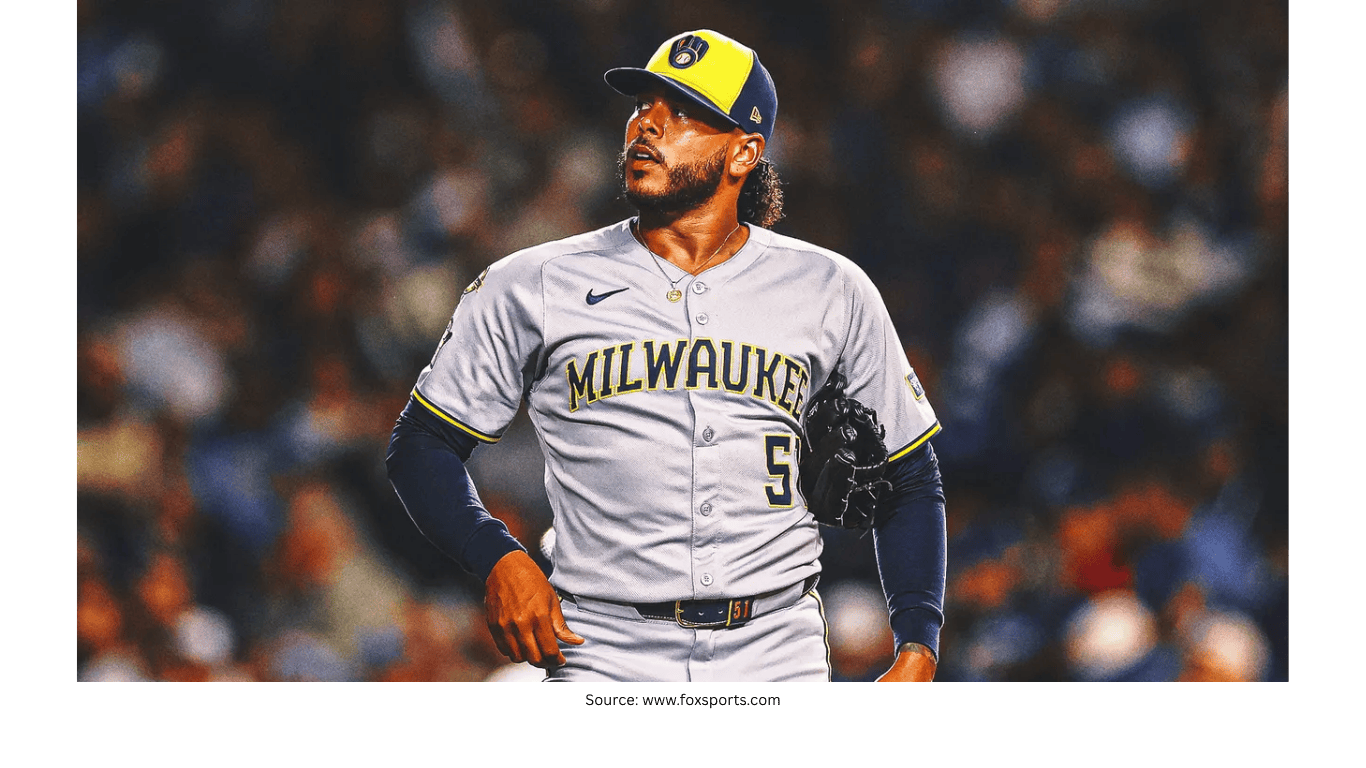
A reported blockbuster pitching move
The New York Mets are reportedly acquiring All-Star right-handed pitcher Freddy Peralta in a trade with the Milwaukee Brewers, according to a report from ESPN on Thursday. If finalized as reported, the move would add a decorated starter to a Mets club that has been active in bringing in established talent, while also reshaping the Brewers’ near-term and long-term pitching outlook.
Peralta’s reported arrival would come with significant prospect cost. The Brewers are set to receive Jett Williams and Brandon Sproat in exchange for Peralta, and will send right-handed pitcher Tobias Myers to New York as part of the deal, per reports. For the Mets, the headline is Peralta—an All-Star in 2025—while the full trade package underscores how aggressively the organization is willing to deal from its farm system to strengthen the Major League roster.
What the reported trade includes
As reported, the trade is built around three notable names: Peralta moving to New York, two highly regarded Mets prospects going to Milwaukee, and Myers included as an additional pitcher headed to the Mets.
- To the Mets (reported): RHP Freddy Peralta; RHP Tobias Myers
- To the Brewers (reported): Prospects Jett Williams and Brandon Sproat
Williams and Sproat are not minor throw-ins. They are ranked third and fifth in the Mets’ farm system, respectively, according to Minor League Baseball. That detail alone illustrates the scale of the reported exchange: New York would be parting with two of its top five prospects to secure Peralta, a pitcher coming off an elite season and carrying a track record of performance at the Major League level.
Peralta’s 2025 season: elite results and an All-Star nod
Peralta’s reported value in the trade is rooted in what he just accomplished. He finished the 2025 MLB season with a 17-6 record, a 2.70 ERA and 204 strikeouts in 33 starts for the Brewers. Those numbers paint the picture of a durable, high-impact starter who took the ball regularly and delivered run prevention and strikeouts at a premium level.
He was voted an All-Star in 2025, his first All-Star selection since 2021. The recognition matters in two ways. First, it reflects how Peralta’s performance was viewed across the league in 2025. Second, it signals that he is not simply a pitcher with a strong statistical line, but one who was considered among the standout performers at his position during the season.
For the Mets, adding a starter with that profile can change the shape of a rotation. A pitcher who can make 33 starts, post a 2.70 ERA, and surpass 200 strikeouts brings both reliability and game-to-game upside—qualities that are difficult to find and expensive to acquire, whether via free agency or trade.
Career path: Brewers mainstay with a long development arc
The 29-year-old has spent his entire Major League career with the Brewers. His professional journey began when he was signed by the Seattle Mariners as an international free agent in 2013, but he did not reach the majors with Seattle. He was traded to the Brewers in 2015, and Milwaukee ultimately became the organization where he developed into an established big-league starter.
Peralta made his Major League debut in 2018. Since then, he has been a consistent presence for the Brewers, culminating in multiple All-Star selections—2021 and 2025—highlighting both longevity and the ability to perform at a level that draws league-wide attention.
If the reported deal is completed, it would mark a significant transition for a pitcher whose Major League identity has been closely tied to Milwaukee. For the Brewers, moving a pitcher of Peralta’s caliber would be a notable roster decision, while the Mets would be taking on a player with a clear history of contributing at the highest level.
How Peralta fits into the Mets’ rotation
Peralta reportedly joins a pitching rotation headlined by Nolan McLean, David Peterson, Kodai Senga, Clay Holmes and Sean Manaea. Adding Peralta to that group would give the Mets another high-end option, potentially deepening the staff and increasing the number of dependable starting choices available over the course of a season.
Rotations are rarely static. Injuries, workload management, and performance swings can quickly test a team’s depth. In that context, the reported acquisition of Peralta can be viewed as a move aimed at raising the floor of the Mets’ pitching staff while also improving its ceiling. A starter coming off a 17-win season with a sub-3.00 ERA naturally changes expectations for any team he joins.
It is also noteworthy that the reported trade includes Myers coming to New York. While Peralta is the centerpiece, the inclusion of another right-handed pitcher suggests the Mets may be seeking additional pitching coverage as part of the transaction, not just a single high-profile arm.
The prospect cost: what the Mets are giving up
The reported deal would send Jett Williams and Brandon Sproat to Milwaukee. According to Minor League Baseball’s rankings, Williams is the No. 3 prospect in the Mets’ system and Sproat is No. 5. Trading two top-five prospects is a clear signal of intent: the Mets appear to be prioritizing Major League impact now, even if that means sacrificing a meaningful portion of their pipeline.
Prospects carry uncertainty, but top-ranked prospects also represent potential long-term value and roster flexibility. By moving Williams and Sproat, the Mets would be converting future-oriented assets into a known commodity in Peralta, a pitcher with a defined track record and recent elite production.
For the Brewers, receiving two highly ranked prospects offers a different kind of value: the opportunity to add young talent to the organization. While the report does not detail timelines or roles, the prospect rankings alone indicate that Milwaukee would be getting players viewed as among the Mets’ best developmental pieces.
Contract status: Peralta’s timeline and what it means
Peralta is in the final year of a five-year, $15.5 million contract extension he signed in February 2020. That contract context is important when evaluating the reported trade, because it frames both the Mets’ commitment and the Brewers’ decision to move him.
As reported, he is owed $8 million for the 2026 season and will become an unrestricted free agent at the end of the season. That means the Mets would be acquiring a pitcher who is approaching free agency, a factor that can shape how teams value a player in trade talks. For New York, it could be seen as an opportunity to add a top starter for a defined period, while also taking on the reality that Peralta may reach the open market after the season.
From Milwaukee’s perspective, the contract timeline can influence roster planning. Trading a player nearing free agency can be a way to recoup value, particularly when the return includes high-end prospects. The reported package—two top-five prospects plus a pitcher moving back to New York—reflects how significant Peralta’s on-field performance and reputation are, even with his contract status in mind.
Part of a broader Mets push
Peralta also becomes the latest in a flurry of big-name acquisitions from the Mets, which includes two-time All-Star Bo Bichette and one-time All-Star Luis Robert Jr. In that light, the reported Peralta trade is not an isolated move; it fits into a pattern of roster building that emphasizes proven Major League talent and players with recognized accolades.
All-Star selections are not the only measure of a player, but they do provide a shorthand for the level of impact a player has had in the league. By reportedly adding Peralta to a group that already includes Bichette and Robert, the Mets appear to be stacking their roster with players who have demonstrated high performance across full seasons.
For fans and observers, the accumulation of All-Star-level talent can shift expectations. It can also intensify scrutiny, as high-profile acquisitions often come with the assumption that the roster is being built to contend immediately.
What to watch next
Because the information is currently framed as a report, the next development will be confirmation and finalization of the trade details as described. If completed, the move would stand out for its combination of present-day impact and future cost: a proven All-Star starter headed to New York, two top prospects headed to Milwaukee, and an additional pitcher included in the exchange.
In purely baseball terms, the reported transaction can be read as a classic trade of certainty for potential. The Mets would be buying a defined level of performance—Peralta’s recent production and durability—while the Brewers would be adding two highly ranked prospects who could shape the organization’s future.
Either way, the reported deal underscores how quickly the landscape can change in Major League Baseball. A player who has spent his entire big-league career with one club, and who just delivered a 17-6 season with a 2.70 ERA and 204 strikeouts, can still be moved when the competitive and contractual calculus aligns.