
Greatest Two-Season Turnarounds in Sports: Indiana’s Rise and the Comebacks That Defined an Era
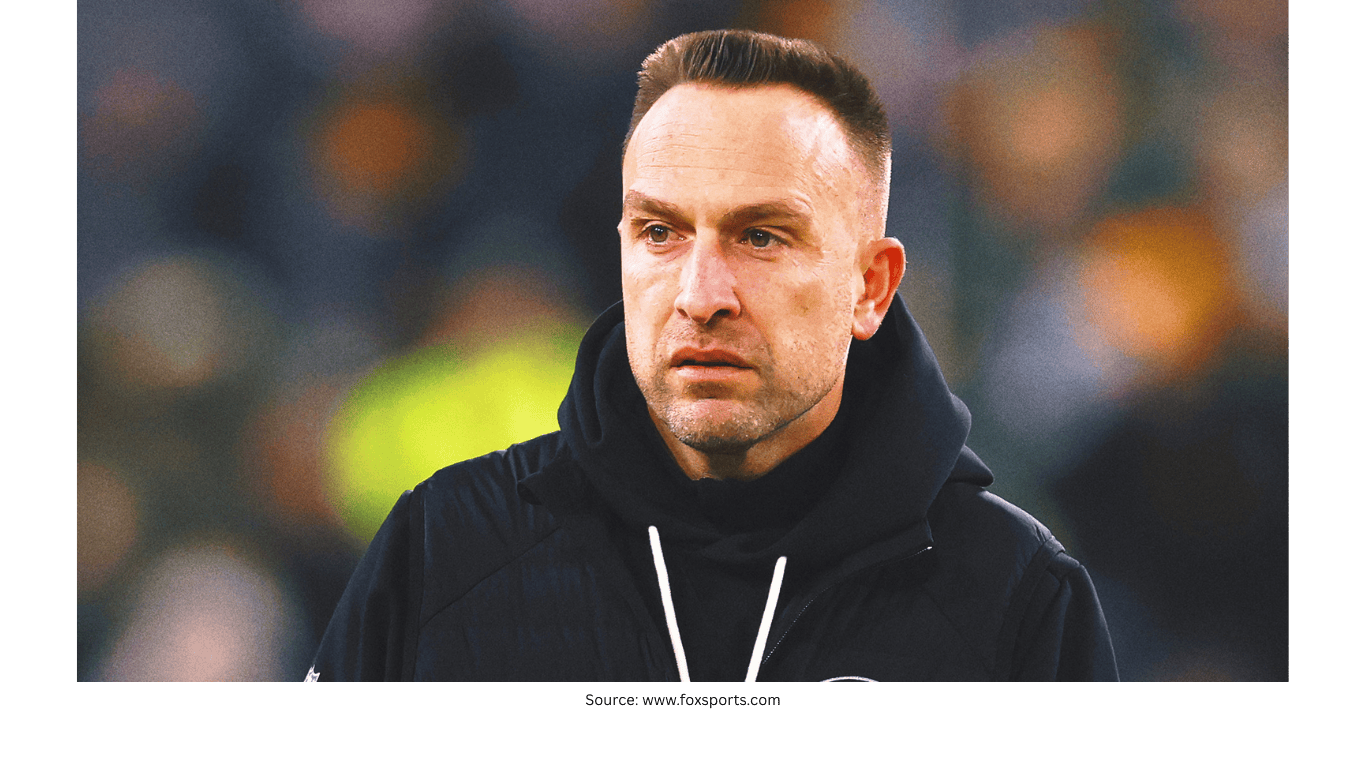
When “doormat” becomes contender
In sports, true turnarounds are supposed to take time. A new coach arrives, the roster slowly changes, a program learns how to win again, and only then do results follow. That’s the conventional arc—incremental progress, a few more wins in Year 1, a stronger foundation in Year 2, and perhaps a breakthrough later.
Indiana’s recent surge has challenged that timeline. For years, opponents could be forgiven for circling the Hoosiers as a comfortable week on the schedule—“glorified practice,” a “guaranteed win,” the kind of matchup that rarely altered a season’s trajectory. Yet in a remarkably short span, Indiana has flipped that reputation on its head under head coach Curt Cignetti.
The scale of the shift stands out because of what Indiana was. Entering the 2025 season, the Hoosiers had the most losses all-time of any FBS program in history: 715 defeats across 136 seasons. They were framed as a perennial conference doormat, a program that historically struggled to sustain momentum even when it found it.
Then came the overhaul. Indiana went 4-8 in 2022 and 3-9 in 2023. Under Cignetti, the Hoosiers became a College Football Playoff team in Year 1 and a Big Ten champion in Year 2, arriving at a moment where they were set to play for the national championship. That kind of leap—across the sport’s most intense competitive terrain—is why Indiana has become the reference point for a broader question: what are the greatest two-season turnarounds in sports?
What counts as a two-season turnaround?
Not every comeback is the same. Some teams improve quickly but don’t win the ultimate prize. Others go from irrelevance to championship level almost immediately. Some transformations are driven by a coaching change, others by a single player’s arrival, and others by a combination of roster development and timely health.
To keep the focus clear, the most compelling examples share a few traits:
A clear “before” period defined by losing seasons, poor records, or low expectations.
A rapid shift within roughly two seasons, not a slow build over many years.
A meaningful “after” outcome—often a championship, a title appearance, or a leap into elite contention.
Indiana’s story fits neatly into this framework, but it also sits within a wider history of teams that have rewritten their futures in a hurry—across college football, the NFL, MLB, the NBA, and even the Premier League.
Indiana: from historic losses to historic stakes
Indiana’s rise is striking not only because of the speed, but because of the starting point. The Hoosiers weren’t coming off a near-miss season or a brief downturn. They were emerging from a long-running identity as a program that simply lost too often.
Within two seasons, that identity was replaced by something entirely different: a team described as a “wrecking ball,” a playoff participant in the first year of the new regime, and a conference champion in the second. With a national championship game ahead against Miami, the Hoosiers’ turnaround became the kind of story that forces comparisons to other rapid rebuilds—while also raising questions about what modern college football can look like.
The broader implication, as framed in the discussion around Indiana, is that the sport’s future may increasingly reward programs that can overhaul quickly rather than patiently. It’s “too early” for certain dynasty comparisons, but the point remains: Indiana’s transformation has become a blueprint conversation, not just a feel-good surprise.
MLB’s iconic reset: the 2016 Chicago Cubs
Baseball offers numerous candidates for dramatic two-year leaps, but one turnaround carries a historical weight few franchises can match: the Chicago Cubs’ path to the 2016 World Series title.
The Cubs weren’t merely trying to win; they were trying to end an era. It had been 108 years since their last championship. In the early 2010s, the club wasn’t hovering on the edge of contention either. Chicago finished in fifth place for five straight seasons from 2010 to 2014, absorbing punishing loss totals along the way: 102 losses in 2012, 96 in 2013, and 89 in 2014.
Then the record turned sharply. In 2015, the Cubs made a drastic 24-win improvement, a surge that ended with a sweep in the NLCS. The next season, the leap became definitive: 103 wins, an NL Central title by 17.5 games, and eight more wins than the next closest club. The championship run included a notable boost from Kyle Schwarber, who returned after tearing his ACL just six months earlier.
In 2016, the Cubs finally ended the century-long Curse of the Billy Goat, turning years of frustration into one of the most memorable payoffs in modern sports.
NFL’s sudden dynasty spark: the 2001 New England Patriots
In the NFL, it’s hard to find a two-season turnaround with a longer shadow than the Patriots’ first Super Bowl season. New England went 5-11 in 2000, following an 8-8 record in 1999. The franchise was not positioned as a dominant force.
The 2001 season became the beginning of something much bigger, and it’s remembered as the start of Tom Brady’s Hall of Fame career. An injury to starter Drew Bledsoe pushed Brady—then a backup and a former sixth-round draft pick—into the lineup. He never gave the job back.
Including the playoffs, Brady went 14-3 as a starter that season (11-3 in the regular season). The Patriots beat the Raiders in the divisional round and defeated the Steelers in Pittsburgh in the AFC Championship game. In Super Bowl XXXVI, Brady led a game-winning field goal drive as time expired to beat the “Greatest Show on Turf” Rams.
That run didn’t just flip a record; it launched a dynasty. From 2001 to 2018, New England won six Super Bowls and appeared in three others, including three Lombardi Trophies from 2001 to 2004.
The Miracle Mets: from 101 losses to a title
The New York Mets’ turnaround at the end of the 1960s remains a classic example of a franchise changing course in a hurry. After the 1967 season—when the Mets lost 101 games—their “lovable losers” identity was no longer charming. Attendance dropped at Shea Stadium, and the losing stopped feeling like a quirky feature of the experience.
There were building blocks, though. Tom Seaver won NL Rookie of the Year in 1967 and quickly emerged as one of the best pitchers in the big leagues. He was joined by Jerry Koosman and Nolan Ryan, forming a formidable pitching trio. Manager Gil Hodges brought discipline and belief that helped reshape the club.
In 1968, the Mets improved to a ninth-place finish in the National League and recorded 73 wins for the first time in team history. Then came the breakthrough: in 1969, New York won 38 of its final 49 games, finished 100-62, swept the Atlanta Braves in the NLCS (3-0), and defeated the heavily favored Baltimore Orioles (4-1) to win the World Series. The “Miracle Mets” became a shorthand for the kind of underdog leap fans never forget.
Dallas Cowboys: from 1-15 to Super Bowl champions
Few “before” seasons look as bleak as 1-15. The Dallas Cowboys posted that record in 1989, which was Jerry Jones’ first season as owner. Yet within a short window, the franchise went from bottom-of-the-league to a championship powerhouse.
The steps came quickly. Dallas won seven games in 1990 and then 11 in 1991, reaching the playoffs for the first time in six years (though losing in the divisional round). By 1992, the Cowboys were overwhelming opponents down the stretch, winning their final five games—including the playoffs—by double digits.
The payoff was emphatic: Dallas won its third Super Bowl, and first in 15 years, blowing out the Buffalo Bills 52-17 in Super Bowl XXVII. The run became the foundation for a broader era of dominance, as the Cowboys won three Super Bowls in a four-year span, powered by head coach Jimmy Johnson and core stars Troy Aikman, Emmitt Smith and Michael Irvin.
USC’s rebound under Pete Carroll
USC’s turnaround is a different kind of story because the Trojans are historically one of college football’s bluebloods, with 11 national championships and eight Heisman Trophy winners. Still, even traditional powers can stumble, and USC did in the early 2000s.
The Trojans went 5-7 in 2000 and followed with a 6-6 season in 2001, Pete Carroll’s first year. Then the rebound arrived: USC went 11-2 in 2002 with a roster that included Carson Palmer and Troy Polamalu. In 2003, with a young Matt Leinert and Reggie Bush, the Trojans went 12-1 and shared the national championship with LSU.
USC won the national championship again in 2004, beating Oklahoma, and played for another title in 2005, losing to Texas in what is remembered as one of the greatest college football games in history. Under Carroll, USC won at least 11 games through the 2008 season, turning early struggles into sustained contention.
Boston Celtics: Larry Bird changes everything
Sometimes a turnaround is tied to the arrival of a single transformational player. The Boston Celtics, despite their legacy, hit a low point in 1978-79, finishing 29-53 with the second-worst record in the NBA.
Then came Larry Bird. Drafted sixth overall in 1979, Bird returned to Indiana State and finished as the unanimous National College Player of the Year before joining Boston. His impact was immediate: in 1979-80, the Celtics jumped to 61-21 and reached the Eastern Conference finals.
The following season, Bird led Boston to the NBA title. In 1980-81, he averaged 21.2 points, 10.9 rebounds, and 5.5 assists per game, and the championship marked the first of three titles in a six-year span. From 1981 to 1987, the Celtics made five NBA Finals appearances, turning a near-bottom finish into a defining era.
San Francisco 49ers: Bill Walsh, Joe Montana, and “The Catch”
The 49ers’ early years under Bill Walsh were rough. In Walsh’s first two seasons as head coach, San Francisco won just two games in 1979 and six in 1980. Then, in 1981, the franchise broke through with 13 wins.
That season included a playoff run that became part of NFL lore. The 49ers beat the New York Giants in the divisional round and then defeated the Dallas Cowboys in the NFC Championship game, a contest highlighted by Dwight Clark’s iconic game-winning touchdown—“The Catch.” San Francisco went on to beat the Cincinnati Bengals in Super Bowl XVI for the franchise’s first Lombardi Trophy.
The 1981 campaign was also Joe Montana’s first as a starter. Over the next nine seasons, the 49ers won four Super Bowls. Even with the 1982 season shortened to nine games due to a strike, San Francisco returned with 10 wins in 1983 and began a streak of 16 consecutive double-digit-win seasons.
The Rams and the “Greatest Show on Turf” ignition
Another NFL turnaround that fits the two-season frame belongs to the St. Louis Rams of the late 1990s. After winning five games in 1997 and four in 1998, the Rams surged to 13 wins in the 1999 regular season and reached Super Bowl XXXIV.
In the championship game, the Rams defeated the Tennessee Titans to win the franchise’s first Super Bowl. The signature moment came when Kurt Warner and Isaac Bruce connected on a 73-yard touchdown with less than two minutes left, sealing the victory.
The season launched the “Greatest Show on Turf,” with the NFL’s top offense for three straight years (1999-2001) under coach Mike Martz—first as offensive coordinator in 1999 and then as head coach in 2000 and 2001. Warner, Bruce, Marshall Faulk and Torry Holt were central to that attack. After the Super Bowl win, the Rams went 10-6 in 2000 and returned to the Super Bowl in 2001 following a franchise-record 14-win regular season.
Leicester City: from outside the Premier League to champions
In soccer, few stories match the improbability of Leicester City’s Premier League title. The club’s 2015-16 championship run is often framed as one of the most unlikely achievements in the history of global sports, and the context makes the two-season swing even more dramatic.
Two years earlier, dreaming of a Premier League title would have felt impossible. In 2014, Leicester wasn’t even in the Premier League. The Foxes had spent a decade in England’s lower divisions, including a season in the third tier, before winning the Championship in 2014-15 and earning automatic promotion.
Many predicted Leicester wouldn’t last in the top flight and would be relegated by the spring of 2016. Instead, under manager Claudio Ranieri, the club outpaced established giants including Manchester City, Arsenal and Manchester United to finish first. The success was fleeting—Ranieri was fired in early 2017 during a season that ended with a 12th-place finish—and Leicester later returned to the second tier. Still, the title remains the club’s only English crown since the team began 142 years ago, and it continues to stand as a benchmark for sudden, stunning ascent.
Where Indiana fits among the greats
Stacked against these examples, Indiana’s case is unusual because it combines an extreme historical baseline with immediate elite results. Some turnarounds are about a franchise getting “good” again; others are about reaching the top of the sport. Indiana’s shift, from 4-8 and 3-9 seasons into playoff participation and a conference title, places it in the most rarefied category of rapid transformations.
It also highlights a recurring truth across sports: the most memorable turnarounds are the ones that change not only a record, but an identity. The Cubs stopped being the team defined by a curse. The Patriots stopped being a middling franchise and became a dynasty. The Mets stopped being a punchline and became champions. Leicester stopped being a newly promoted club and became title winners.
Indiana, long defined by losses, has put itself in position to be defined by something else entirely—proof that, sometimes, the distance between “guaranteed win” and “national contender” can be shockingly short.